
Case Study: S O’Brien Heating Solutions
Building a Website to Support the Next Stage of an Established Heating Business.
Project Introducton
Client: S O’Brien Heating Solutions
Sector: Plumbing, Heating & Commercial Heating, Trades
Platform: WordPress & WooCommerce
Our Work: Website Design & Development, E-Commerce
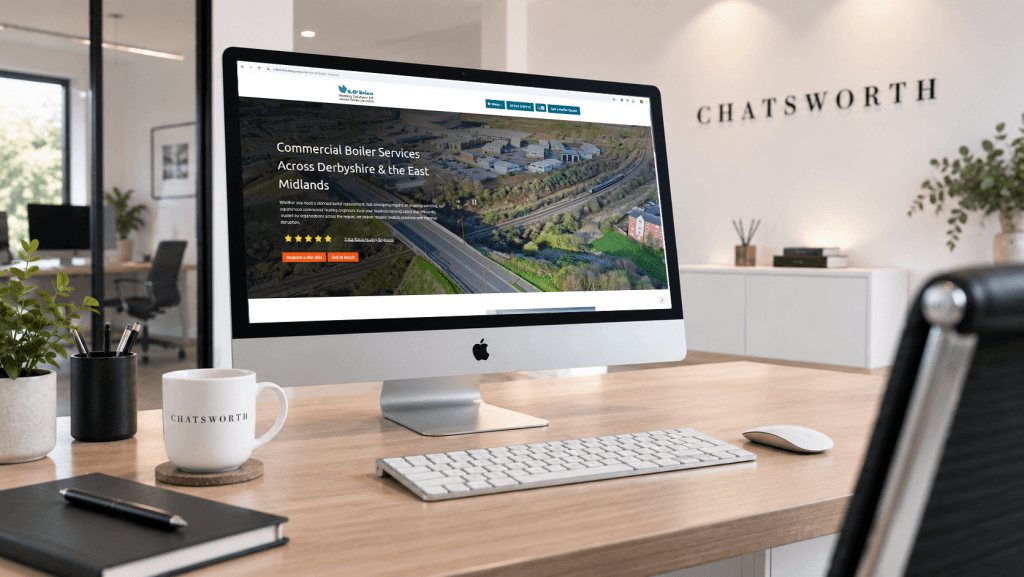
A successful website project should do more than replace an old website with a newer-looking one.
For established businesses in particular, rebuilding a website creates an opportunity to look at where the company is today, where it wants to go next, which customers it wants to attract and what role the website needs to play in making that happen.
That was very much the approach we took when working with S O’Brien Heating Solutions.
S O’Brien was already an established heating company with a strong domestic customer base. However, the business wanted its new website to do considerably more than simply promote its existing services.
One of the key objectives was to develop the commercial side of the business and begin targeting organisations requiring professional heating services across a range of commercial environments.
At the same time, the new website needed to continue supporting the company’s established domestic services, provide a professional representation of the business, perform well technically and introduce an online subscription facility for its heating care plans.
The resulting project combined:
- website strategy and planning;
- WordPress web design and development;
- research into potential commercial markets;
- keyword and search-intent research;
- commercial landing page development;
- search engine optimisation;
- professional photography;
- drone photography;
- video content;
- website performance and Core Web Vitals optimisation;
- WooCommerce development;
- subscription payments;
- and bespoke checkout programming.
Rather than treating these as separate services, we designed them as parts of one wider digital strategy.
The objective was simple:
Build a website capable of supporting the business S O’Brien wanted to become, rather than simply documenting the business it already was.
Understanding the Business Before Designing the Website
One of the most important parts of a web design project happens before we begin designing pages.
We first need to understand the business.
For S O’Brien, this meant looking beyond the services the company already provided and discussing its ambitions for the future.
The company had extensive experience within the heating industry and an established domestic customer base. The opportunity was to make greater use of that experience by developing its commercial heating work.
That immediately changed the nature of the project.
Had we simply approached the project as a website redesign, we could have created attractive pages describing boilers, heating systems and the company’s existing services.
But that wouldn’t necessarily have helped S O’Brien win the type of work it wanted next.
Instead, the website needed to become part of the company’s business development strategy.
Before deciding what pages should be created, we therefore considered questions such as:
Who are S O’Brien’s ideal commercial customers?
What types of organisations could benefit from its experience?
What problems are those organisations trying to solve?
How might a facilities manager, school, care provider or business owner search for those services?
Which commercial sectors should be prioritised?
What information would a potential commercial customer expect to see before making contact?
And perhaps most importantly:
How could we demonstrate that S O’Brien understood the requirements of those customers rather than simply stating that it provided “commercial heating”?
Those questions helped determine the structure of the new commercial section.
Moving Beyond a Generic “Commercial Heating” Page
One of the easiest approaches to expanding a website would have been to add a page called “Commercial Heating Services”, write several hundred words and hope it ranked for commercial heating searches.
We deliberately went further.
A person responsible for heating within a school can have very different priorities from somebody responsible for an office, care home or industrial building.
The equipment may sometimes be similar.
The customer’s concerns often aren’t.
A school may need work carefully planned around pupils, staff, term times and disruption.
A care home has vulnerable residents and heating and hot water requirements that cannot simply be treated as an inconvenience.
An office needs a comfortable working environment while minimising disruption to employees and normal business operations.
Industrial and larger commercial premises can present different requirements again.
We therefore developed the commercial section around the customer and application, rather than simply around a list of heating products.
This resulted in dedicated content targeting important sectors and applications, including commercial heating services for:
- schools;
- care homes;
- offices;
- industrial premises;
- and other commercial organisations.
This approach provided two important advantages.
Firstly, it allowed S O’Brien to speak directly to the concerns of different potential customers.
Secondly, it created highly focused landing pages that could target much more specific search queries than a single generic commercial heating page.
Researching How Potential Customers Search
Search engine optimisation was considered during the planning of the website rather than added after the website had been built.
This distinction is important.
SEO isn’t simply a matter of inserting keywords into finished pages.
Good SEO can influence the entire architecture of a website.
We researched the services S O’Brien wanted to promote, the organisations it wanted to work with and the terminology potential customers were likely to use when searching.
That research helped us identify opportunities around searches relating to subjects such as commercial boiler installation, commercial heating engineers and heating services for particular types of organisations.
It also highlighted an important principle that we regularly apply to our SEO work:
The most valuable search isn’t necessarily the one with the largest search volume.
For a specialist heating contractor, a highly specific search made by somebody actively responsible for sourcing a contractor can potentially be considerably more valuable than hundreds of broad informational searches.
This influenced how we planned the content.
Instead of trying to make one page rank for everything associated with commercial heating, we created pages with clearly defined purposes.
Creating Pages Around Search Intent
Every important page needed to answer a simple question:
What is the person arriving on this page actually trying to achieve?
Someone searching for a commercial heating contractor for a school doesn’t necessarily want a general explanation of central heating.
They may want to know:
Does this company work in schools?
Do they understand the practical requirements?
Can they install new heating systems?
Can they repair and maintain existing systems?
Are they appropriately experienced?
Do they work within our area?
Can I trust them in an environment containing staff, pupils or vulnerable people?
How do I arrange a discussion or site visit?
The copy was therefore written to answer real purchasing questions rather than simply provide search engines with keywords.
This is an important distinction in the way we approach SEO copywriting.
The primary audience is always the potential customer.
Search optimisation helps that customer find the page.
The content then has to do the much more important job of convincing them that they have found the right company.
Building Topical Relevance Around Commercial Heating
Creating several related commercial pages also helped establish a much clearer picture of S O’Brien’s commercial capabilities.
Instead of the website effectively saying:
“We also do commercial heating.”
It could demonstrate commercial expertise through a structured collection of relevant content.
The main commercial section could introduce the overall service and guide visitors towards pages relating specifically to their requirements.
Those pages could then explore individual sectors and services in greater depth.
Internal links between relevant pages helped users navigate the website while also establishing relationships between the subjects for search engines.
This created a much stronger foundation for future content.
As new commercial projects are completed, case studies can be added.
Frequently asked questions can be expanded.
Individual commercial services can be developed further where there is sufficient search demand.
Articles can target questions encountered during real customer conversations.
The website was therefore designed not as a finished collection of static pages, but as a platform that could continue growing alongside S O’Brien’s commercial business.
Writing for People Rather Than Search Engines
Heating is a technical subject, but the website still needed to communicate in straightforward language.
One of the dangers when writing service pages is trying too hard to sound authoritative.
The result can be pages filled with technical terminology that may be accurate but don’t actually help the person considering making an enquiry.
S O’Brien already had something much more useful: genuine industry experience.
Our job was to communicate that experience clearly.
The content therefore combined technical credibility with practical explanations of what the service means for the customer.
We also wanted the personality of the company to remain visible.
Professionalism doesn’t need to mean becoming anonymous or overly corporate.
S O’Brien’s approach to customer service and its belief that “manners cost nothing” gave us something authentic to work with.
That is far more valuable than inventing generic marketing statements about being “customer focused”.
Where possible, our approach is to find what genuinely makes a client different and allow the website to demonstrate it.
Professional Photography Rather Than Generic Stock Images
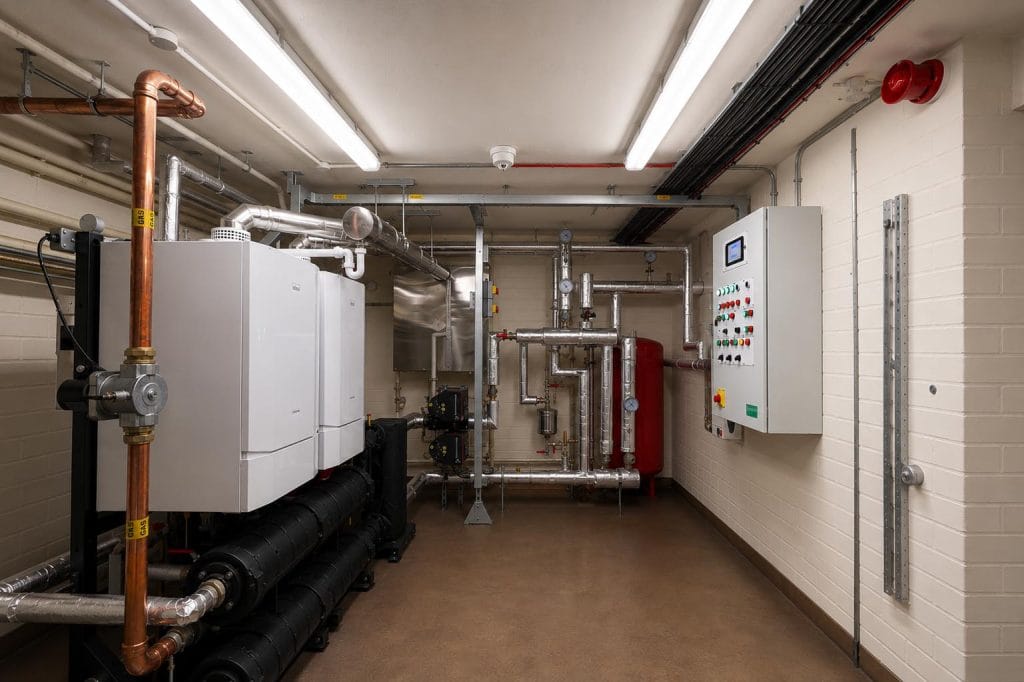
The same principle applied to the photography.
A heating company could easily fill a website with stock photographs of boilers, radiators, engineers and anonymous commercial buildings.
The problem is that almost every competitor has access to exactly the same photographs.
They tell visitors very little about the actual company.
For S O’Brien, we carried out professional photography to create imagery specifically for the new website.
This helped us show the people, work and business behind the website rather than relying entirely on generic imagery.
Original photography provides several benefits.
It gives the website its own visual identity.
It helps build trust.
It shows that the company actually carries out the work being discussed.
It provides material that can subsequently be reused across landing pages, articles, case studies, social media and other marketing.
Most importantly, it makes the website feel like S O’Brien’s website, rather than a website template that happens to have a heating company’s logo attached to it.
Using Drone Photography to Show the Business From a Different Perspective
We also incorporated drone photography into the project.
Drone imagery is particularly useful when a business works on larger properties, commercial sites or locations where conventional ground-level photography struggles to communicate scale.
Used properly, it can give a website a much stronger visual introduction.
However, we don’t believe in adding drone footage simply because it looks impressive.
Photography and video should support the story the website is trying to tell.
For S O’Brien, aerial imagery helped create a broader visual impression of the environments in which the company operates and provided material that could be incorporated into the website’s hero sections.
This gave the website a much more distinctive appearance than would have been possible using standard stock imagery alone.
Video Hero Content Without Sacrificing Website Performance
We also produced video material for use within the website’s hero areas.
Video can be extremely effective on a modern website.
It can also be extremely damaging when implemented badly.
Large video files, oversized images, unnecessary scripts and poorly configured page builders can turn an impressive-looking website into a frustrating experience on mobile devices.
For that reason, visual design and website performance were considered together.
The objective wasn’t simply to make the site look impressive on the computer used to design it.
It needed to work for real visitors using different devices, screen sizes and connection speeds.
Video assets therefore formed part of the wider performance strategy rather than being added without consideration for their effect on loading times.
Core Web Vitals and Technical Performance
Website speed is not something we regard as a final-stage optimisation exercise.
It needs to be considered throughout development.
Google’s Core Web Vitals provide measurements relating to aspects of the real-world experience visitors have when loading and interacting with web pages.
A technically poor website can undermine excellent design and content.
Visitors shouldn’t have to wait while huge images download.
The page shouldn’t jump around as different elements appear.
Interactive elements shouldn’t feel sluggish.
The S O’Brien website was therefore developed with performance in mind, including careful consideration of imagery, video, page structure and the wider WordPress environment.
This was particularly important because the site needed to combine rich visual content with commercial landing pages and e-commerce functionality.
The aim was to achieve both.
A website should not have to choose between looking good and performing well.
Creating a Clear Domestic and Commercial Website Structure
Another important challenge was ensuring that the expansion into commercial work didn’t come at the expense of S O’Brien’s existing domestic business.
The company hadn’t stopped serving homeowners.
The website therefore needed to communicate two substantial areas of expertise without becoming confusing.
We developed a structure that separated domestic and commercial services clearly while keeping them within one coherent company website.
This allowed domestic customers to quickly find information relevant to their homes while commercial visitors could move into a dedicated section designed around their requirements.
The website could therefore support the company’s existing revenue while creating room for future growth.
This is a consideration that is sometimes overlooked during website redesigns.
Growth doesn’t always mean abandoning what already works.
Often the better strategy is to build on it.
Adding New Services as the Business Developed
The new architecture also gave S O’Brien room to introduce and develop additional services.
Rather than forcing every new service into an increasingly crowded general page, important areas could be given their own landing pages and supporting content.
This included developing content around newer areas such as air source heat pumps and air conditioning alongside the company’s established heating services.
Again, the objective wasn’t simply to increase the number of pages on the website.
Every page needed a reason to exist.
A useful service page should target a genuine customer requirement, explain the service properly and provide a logical route towards making an enquiry.
Turning Heating Care Plans Into an Online Product
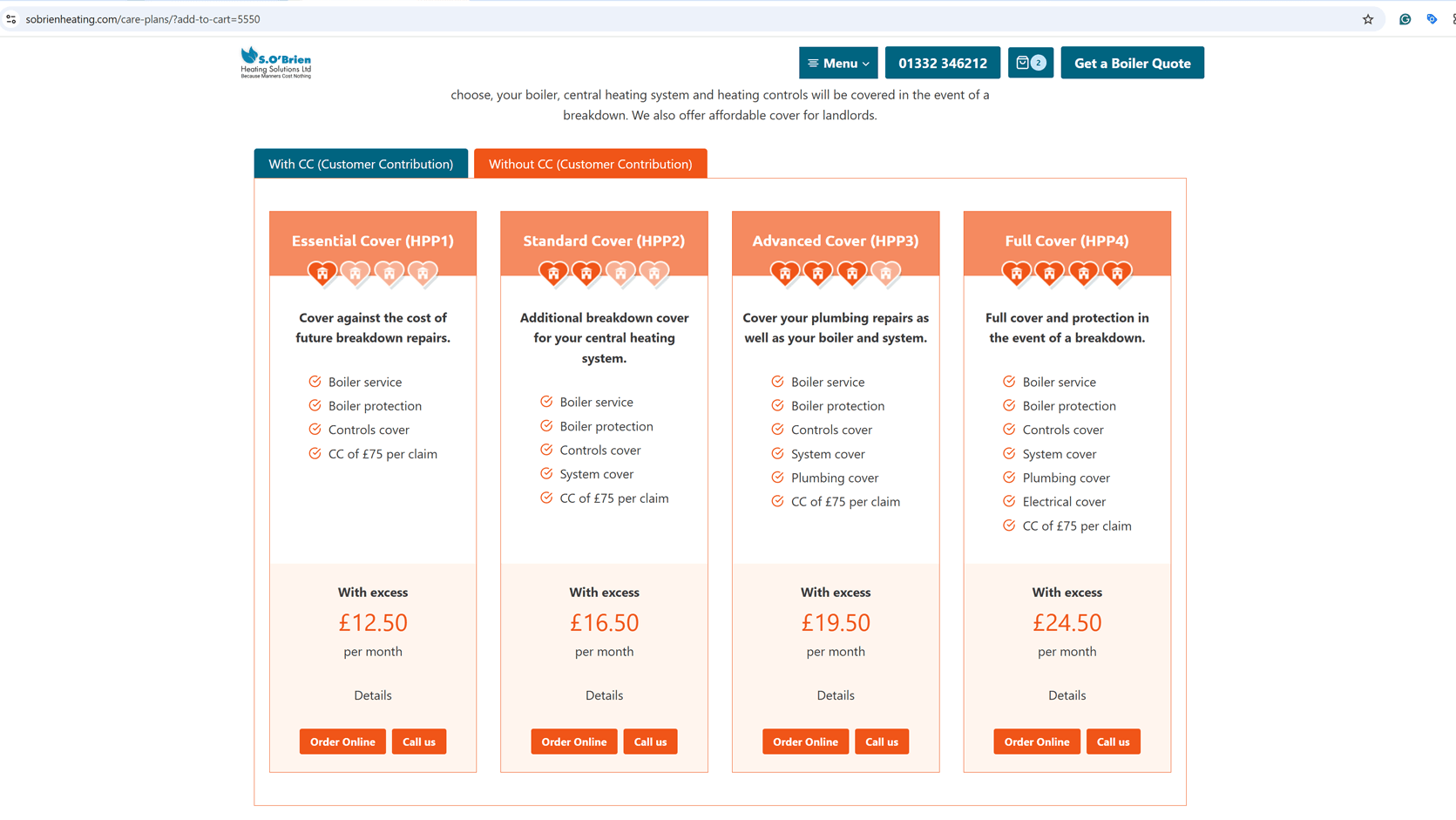
One of the more technically interesting parts of the project involved S O’Brien’s heating care plans.
The requirement went beyond displaying information about the plans.
Customers needed to be able to purchase a plan online and establish the recurring subscription.
That transformed the website from a marketing platform into part of the company’s operational infrastructure.
We used WooCommerce as the foundation for the e-commerce functionality, but the required purchasing process didn’t fit neatly into a conventional online-shop checkout.
A care plan isn’t the same as ordering a physical product.
There is no parcel to put in a box.
The objective is to enrol the customer into an ongoing service and create the associated recurring payment correctly.
That meant the checkout process needed to reflect the product being sold.
Bespoke WooCommerce Subscription Checkout Development
Rather than forcing customers through an unnecessarily generic e-commerce journey, we developed customised checkout functionality specifically for the care-plan process.
The system was designed so that a customer could select the appropriate care plan through the WooCommerce website and proceed into a checkout process capable of creating the required subscription.
Behind what appears to the customer to be a relatively straightforward transaction is a more complex workflow.
The website needs to understand which plan has been selected.
The appropriate customer and payment information needs to be collected.
The payment process needs to be initiated securely.
The recurring subscription needs to be created correctly.
And the website needs reliable confirmation that the transaction has succeeded.
We developed the additional code necessary to connect this process together rather than limiting the project to the standard functionality available out of the box.
This is one of the advantages of working with a web developer rather than simply choosing a WordPress theme and installing plugins.
Plugins are extremely useful.
But sometimes the business requirement doesn’t perfectly match the way a plugin expects a business to operate.
In those situations, the website should adapt to the business — not the other way around.
Using Stripe for Secure Subscription Payments
Stripe was incorporated into the payment workflow to handle the online transaction and recurring subscription.
The checkout process was designed to pass the appropriate information through to the payment system and create the subscription required for the selected care plan.
But initiating a payment is only part of a reliable subscription system.
The website also needs to know what happened afterwards.
Customers can close browser windows.
Connections can fail.
Payment authentication can introduce additional steps.
A successful payment shouldn’t depend entirely upon the customer returning to a particular “thank you” page.
For that reason, the development included handling the payment confirmation process through the appropriate webhook workflow.
This allows the payment platform to communicate the result of relevant events back to the website.
It is a much more robust approach than simply assuming that reaching the next page means everything worked.
Making Complex Development Feel Simple to the Customer
One of our favourite principles in web development is that complexity should usually be hidden from the person using the website.
A customer buying a heating care plan doesn’t care about checkout sessions, webhook events or the underlying WordPress logic.
Nor should they need to.
They want to choose the right plan, enter the necessary information, make the payment and know that their cover has been arranged.
The development work happens behind the scenes so that the experience at the front end can remain straightforward.
That philosophy applies to much of our bespoke WordPress work.
The complexity belongs in the code, not in the customer’s journey.
Designing Around the Business Process
The care-plan functionality also demonstrates a wider point about our approach to e-commerce.
E-commerce doesn’t have to mean selling hundreds of physical products from shelves.
WooCommerce can provide the foundation for many different types of online transaction:
service plans;
memberships;
subscriptions;
bookings;
deposits;
specialist products;
bespoke quotations;
and other business-specific purchasing processes.
The important part is understanding what needs to happen commercially before deciding how the technology should work.
For S O’Brien, the question wasn’t:
“How can we add WooCommerce?”
It was:
“How should a customer purchase and activate a care plan online?”
The technology followed from that.
One Website, Several Different Jobs
By the end of the project, the S O’Brien website had several important responsibilities.
It needed to:
represent an established local heating business professionally;
generate domestic enquiries;
introduce and develop the company’s commercial heating services;
target specific commercial sectors through search;
support new service areas;
demonstrate the people and work behind the company through original photography;
use drone and video content to create a strong visual identity;
perform well technically;
and allow customers to purchase recurring heating care plans online.
These requirements crossed several disciplines.
Web design alone wouldn’t have been enough.
Neither would SEO.
Neither would photography.
Neither would programming.
The value came from considering them together.
Web Design and SEO Shouldn’t Be Separate Projects
The S O’Brien project is a good example of why we prefer to think about SEO while planning a website.
If we had designed the website first and considered search optimisation afterwards, the commercial section could have looked very different.
We might have ended up trying to squeeze several markets into one page.
Instead, research influenced the website structure.
The website structure influenced the content.
The content influenced internal linking.
The target customers influenced the photography and messaging.
And the services S O’Brien wanted to develop influenced what we prioritised.
This creates a much stronger foundation than building a website and subsequently asking:
“Now, what keywords should we add?”
Creating Assets That Can Continue Producing Value
Another advantage of approaching the project comprehensively is that much of the work continues to have value after launch.
The professional photography can be reused.
The drone footage can appear in future marketing.
The commercial architecture can accommodate additional sectors.
Existing commercial pages can be expanded as S O’Brien gains more projects and experience within each market.
Completed jobs can become detailed case studies.
Questions asked by prospective customers can become useful articles.
Search data can identify additional opportunities.
The care-plan system can continue processing subscriptions.
In other words, the website isn’t simply a finished design.
It is infrastructure that the company can continue using and developing.
Measuring Success Beyond Appearance
A successful web design project isn’t determined by whether everybody likes the homepage on launch day.
Appearance matters, of course.
But for a commercial website, better questions include:
Can the right customers find it?
Does it explain what the company does?
Does it support the direction in which the business wants to grow?
Does it make the company look credible?
Does it answer the questions potential customers are likely to have?
Does it make contacting or buying from the company straightforward?
Does it perform properly?
Can it be expanded?
Can it automate processes that previously required manual administration?
Those were the measures that mattered for S O’Brien.
Early Search Visibility for the New Commercial Content
One of the encouraging signs following the development of the new commercial section was how quickly some of the highly targeted content began appearing prominently within search results.
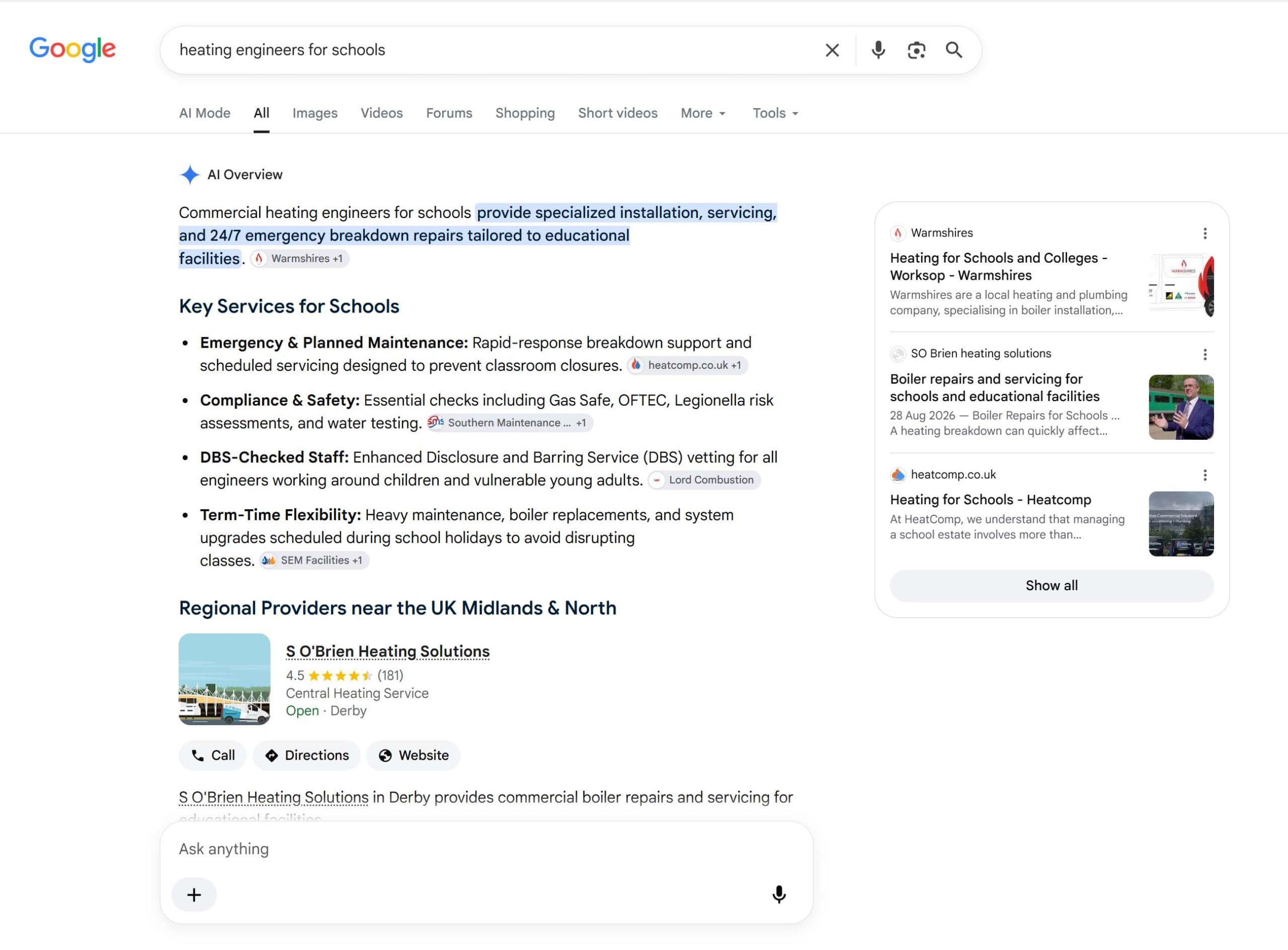
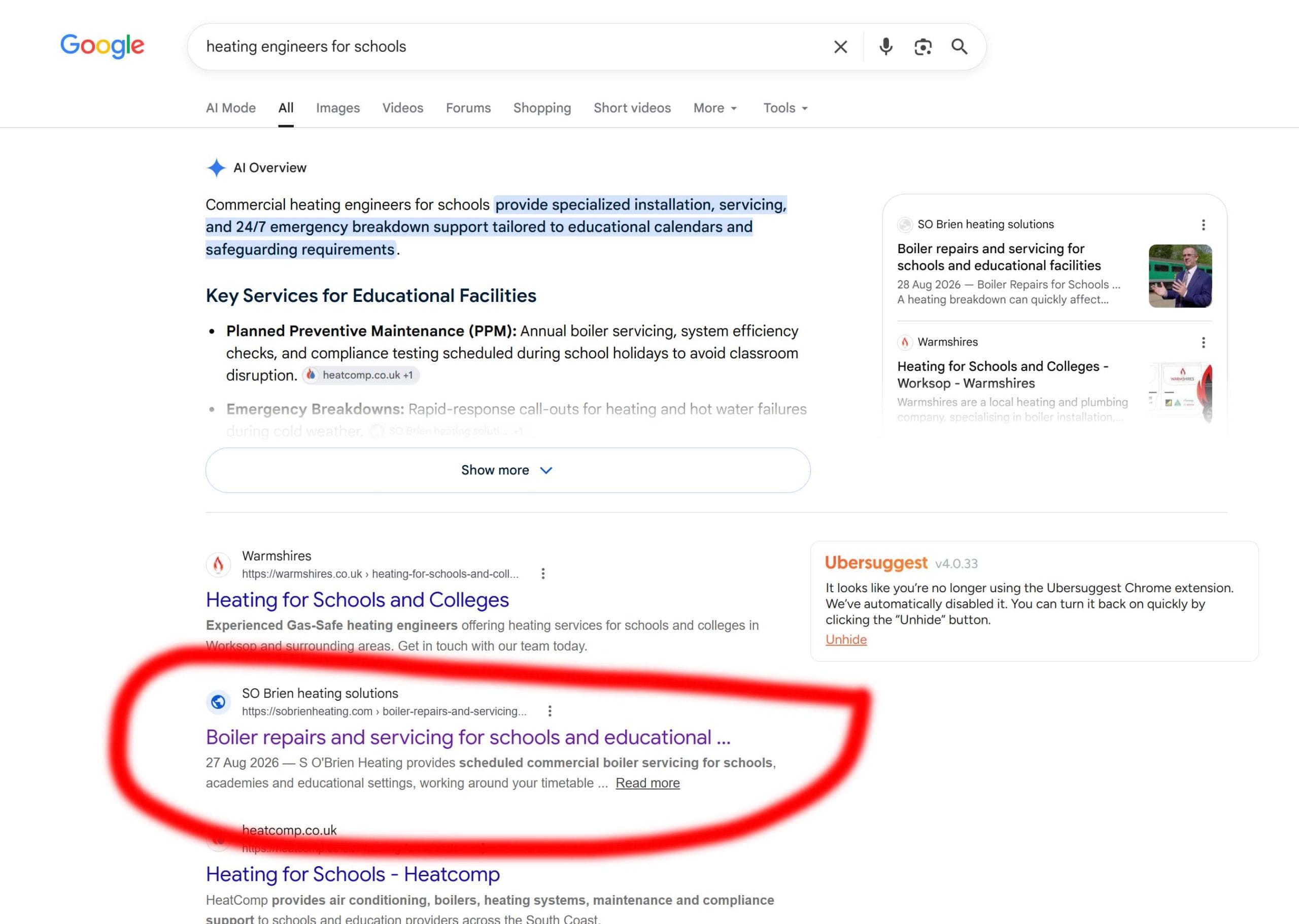
Pages created around specific commercial applications, including heating services for schools and care environments, began gaining strong visibility for relevant searches relatively quickly.
That is particularly significant because these weren’t pages created simply to attract traffic.
They were designed around the exact types of organisations S O’Brien wanted to reach.
This demonstrates why we are often more interested in relevance than raw visitor numbers.
A thousand visitors looking for general DIY boiler information may be worth very little to a commercial heating contractor.
One facilities manager searching for a contractor capable of solving a real heating problem could be considerably more valuable.
SEO should ultimately support business objectives, not simply produce impressive-looking traffic graphs.
What Made the S O’Brien Project Different?
The interesting part of this project wasn’t any single piece of technology.
It was the way the different elements worked together.
We didn’t just build a new WordPress website.
We considered where the business wanted to grow.
We researched the customers it wanted to reach.
We researched how those customers searched.
We created a website architecture capable of targeting those opportunities.
We wrote content specifically for those audiences.
We produced original photography and aerial imagery.
We incorporated video while considering website performance.
We developed a new commercial section capable of growing over time.
And when standard e-commerce functionality didn’t perfectly match the care-plan purchasing process, we wrote the additional functionality needed to make it work.
That is a very different process from selecting a template and changing the logo.
A Website Built Around Business Objectives
The S O’Brien project demonstrates the approach we believe produces the strongest business websites.
Start with the business.
Understand the customer.
Identify the opportunity.
Research how people search.
Plan the website around those findings.
Create genuinely useful content.
Produce authentic imagery.
Build the technology required to support the business.
Then continue developing what works.
For S O’Brien, that meant creating a website capable of supporting both an established domestic heating business and an ambitious expansion into commercial heating services.
It meant combining WordPress development, SEO strategy, copywriting, photography, drone work, video, performance optimisation and bespoke WooCommerce programming within a single project.
Most importantly, it meant building something with a commercial purpose.
Because ultimately, a business doesn’t need a new website simply because its old one looks dated.
It needs a website that helps it get where it wants to go next.
Planning a Website Around Where Your Business Is Going?
At Chatsworth Web Solutions, we design and develop websites around the objectives of the businesses behind them.
That can mean much more than creating a new design.
We can help research new markets, plan website architecture, identify search opportunities, develop service and sector landing pages, produce professional photography and video, improve technical performance and build bespoke WordPress and WooCommerce functionality where an off-the-shelf solution isn’t enough.
Whether you’re replacing an existing website, moving into a new market, introducing online sales or looking for a website that plays a more active role in generating business, the starting point is the same:
Understand what you want the website to achieve.
From there, we can work out what needs to be designed, written, photographed, optimised or built to make it happen.